



Common Credit Card Fees and How to Avoid Them
Common Credit Card Fees and How to Avoid Them
Credit cards have become one of the most common payment methods available. They’re easy to apply for, can be used to shop securely online or in-store, and are offered by many retail and financial institutions.

However, it’s important to remember certain features common to all credit cards—like fees and interest rates. Read below for our list of typical credit card fees and the main things you should know about them—including how to avoid them!
Late Fees
A late fee is charged if you don’t pay the minimum balance on your account by your billing period’s due date. Late fees are charged once every billing cycle, every time you don’t pay that minimum balance. These fees are typically around $25-$30. So, if you miss your payments for 2 months in a row, you could potentially add $50+ to your outstanding bill.
And, if you’re consistently overdue on payments (let’s say for 6 months) the fee can get as high as $38-$50, your card can be shut down, and your credit score will most likely be negatively impacted.
Setting up automatic payments so you don’t have to remember to pay the minimum balance every month is a good way to keep on track. Also, if you think you might have payment issues, talk with your cardholder to see if they can work with you to avoid any late fees.
Balance Transfer Credit Card Fees
A balance transfer is when you move a balance from a credit card you currently have to a new one. The fee charged on transfers is often between 1-5% percent of the outstanding balance. Balance transfers can be a great way to save money and pay less in fees in the long run.
Most people choose to do balance transfers when they have a high-interest credit card and want to move to a low-interest or zero-percent-interest credit card instead. But, when shopping around for lower-interest credit cards, look for ones that won’t charge you a fee to do the transfer.
If you don’t see any advertised, try calling and speaking to a representative because it’s possible there could be an unlisted special promotion.
Cash Advance
A cash advance allows you to withdraw up to a certain amount from your credit card. You can take an advance on your card at an ATM or within your bank’s branch. Cash advance fees can range from 3-5% of the amount borrowed. While this can be a great way to get quick cash, keep in mind that interest rates on cash advances are much higher than normal purchase rates.
These rates compound daily versus monthly, so you’ll want to also check the terms on your card to see how your credit card company charges for this fee. In general, cash advances are the most expensive way to borrow money, so it’s best not to take out any unless you absolutely have to.
Annual Fees
This is a fee some companies charge every year simply for issuing you a credit card. Not all cards come with annual fees (for example, cards from credit unions usually don’t charge annual fees), but secured and premium credit cards often do.
If you decide to choose a card that’s not from a credit union, the annual fee can range from $19 all the way up to $500. Keep in mind if you’re going to try and rebuild your credit, you might have to start with a secure card that has an annual fee before you can qualify for a card without one.
At Topside Federal Credit Union, none of our credit cards come with annual fees, so our members save money by choosing a credit card from us!
Foreign Transaction Fees
Purchases or cash advances you make outside of the United States or in foreign currency are known as foreign transactions. When your payment is processed, you’ll see a debit from your card plus an additional fee of 1-5%, depending on your credit card type. Don’t forget this applies if you shop online and the seller only accepts their country’s currency as payment.
To avoid foreign transaction credit card fees, plan to get cash in the currency you need. If you frequently travel overseas, you might want to ask your credit card company to waive the fees.
Over-Limit Fees
As easy as it is to swipe your card, be mindful of your card’s spending limits. You’ll be charged an over-limit fee when you exceed your credit limit. Fees can typically reach as high as $35 per transaction but it’s against the Credit Card Act of 2009 to be charged more than the amount you exceeded. For example, if you exceed your spending limit by $25, you'll only be charged up to a $25 fee.
Avoid over-limit fees by keeping your card balance low and being aware of your balance at all times, which is easy to do with online banking. Topside FCU offers free online and mobile banking so you can always have your balance at the click of a button!
Choose Your Topside Federal Credit Union Credit Card
At Topside Federal Credit Union, we offer four different Visa credit cards, no annual fees, and competitive interest rates. Click below to apply today!

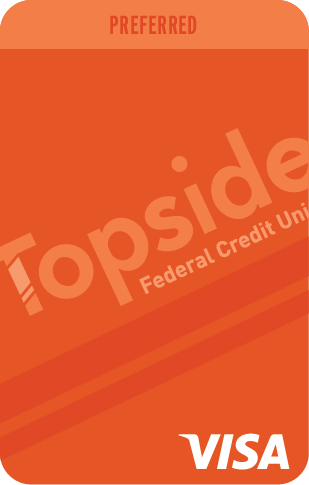
Visa Preferred Credit Card
A generous credit line and a premium rate. The same features as our Visa credit card PLUS credit lines from $10,000 to $30,000.

Visa Preferred Credit Card
A generous credit line and a premium rate. The same features as our Visa credit card PLUS credit lines from $10,000 to $30,000.
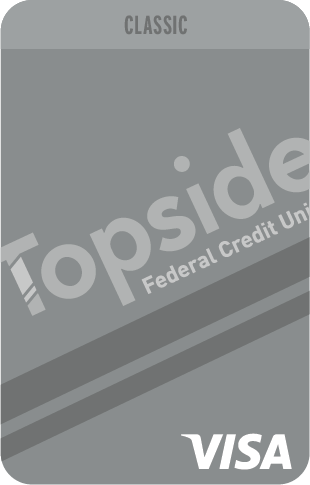
Visa Credit Card
Control spending with a low-interest rate. Enjoy line amounts of $500 to $10,000 on top of many convenient features.

Credit Builder Credit Card
Establish or repair your credit with timely payments on your secured credit card. Credit lines of $500 to $6,000 are backed by your savings.
Warning: You Are Leaving This Site.
You are leaving the Topside Federal Credit Union website.
You are being directed to a third-party website.
This link is provided for your convenience. Please note that this third-party website is not controlled by Topside Federal Credit Union or subject to our privacy policy.
Thank you for visiting our site. We hope your visit was informative and enjoyable.
You are about to follow a link to [Link]. To proceed, click 'Continue' below. To remain on this site, click 'Cancel' below.